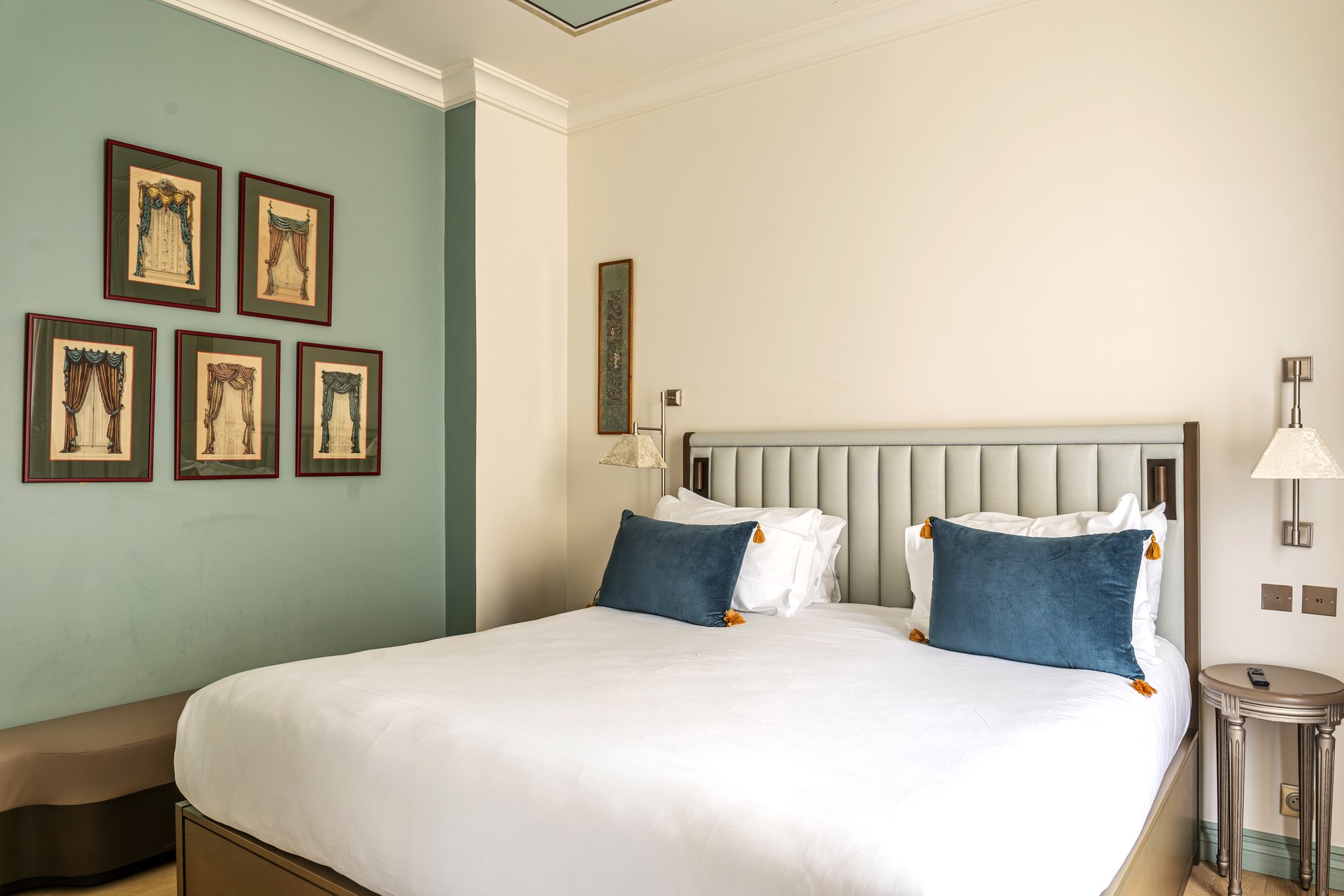
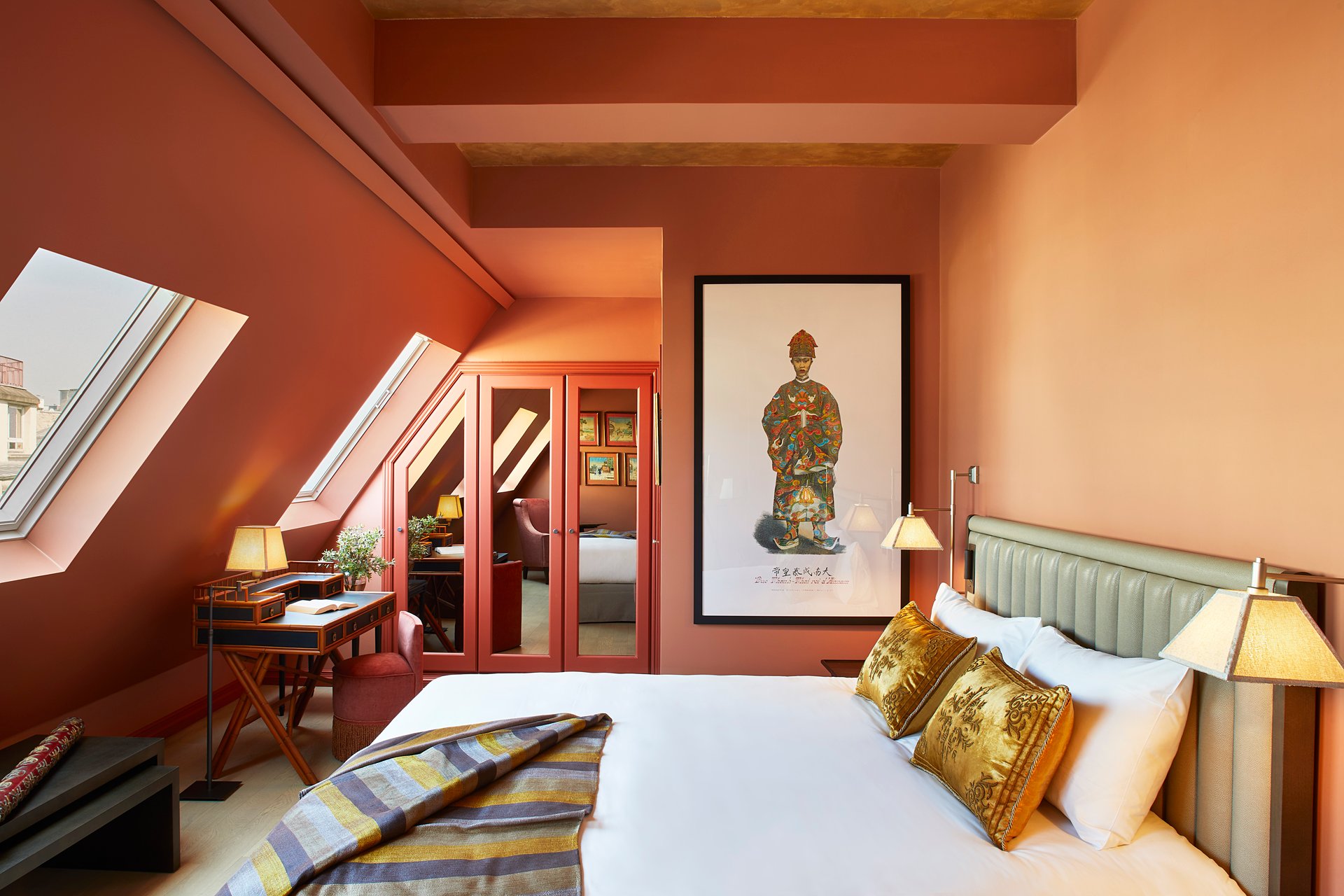
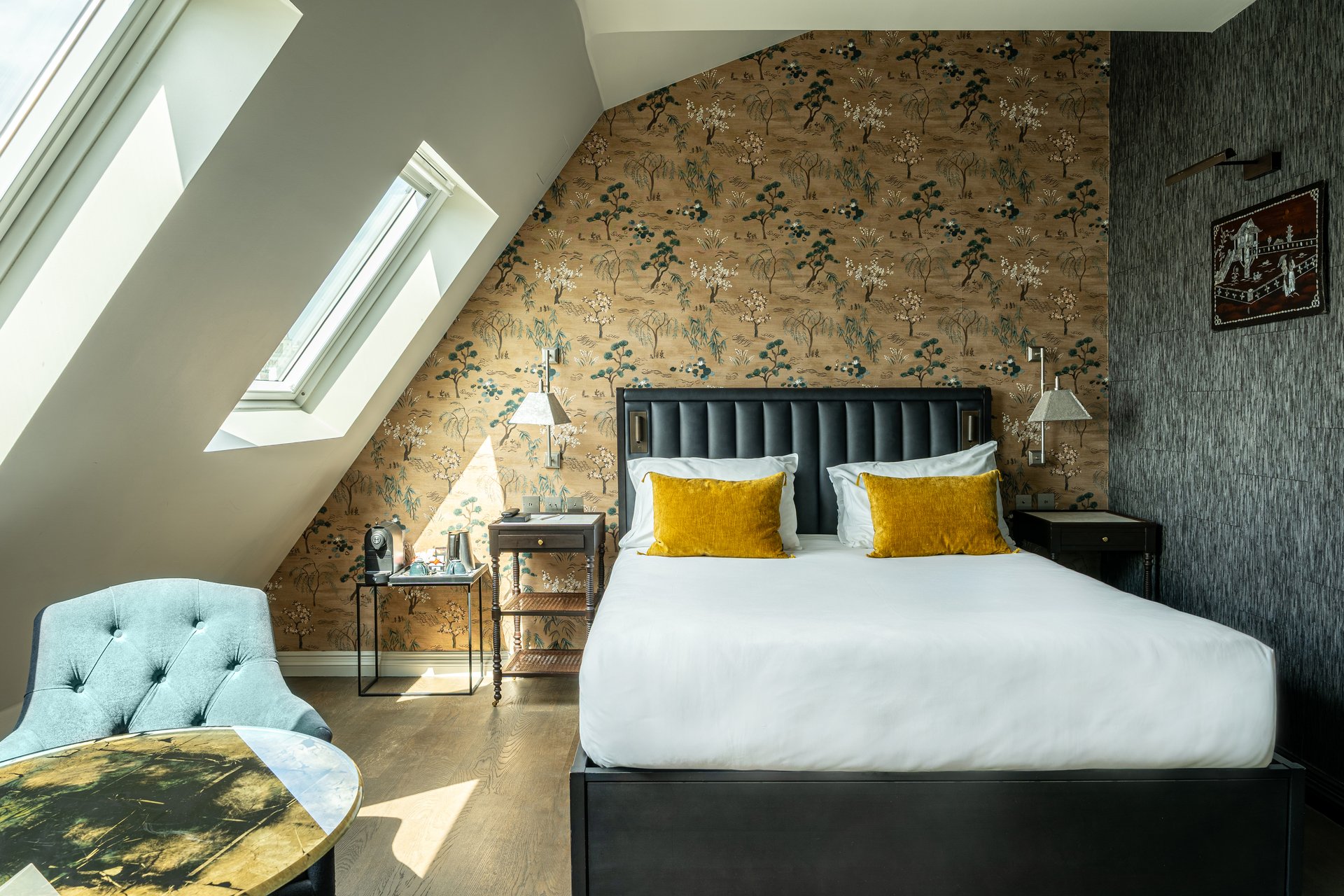
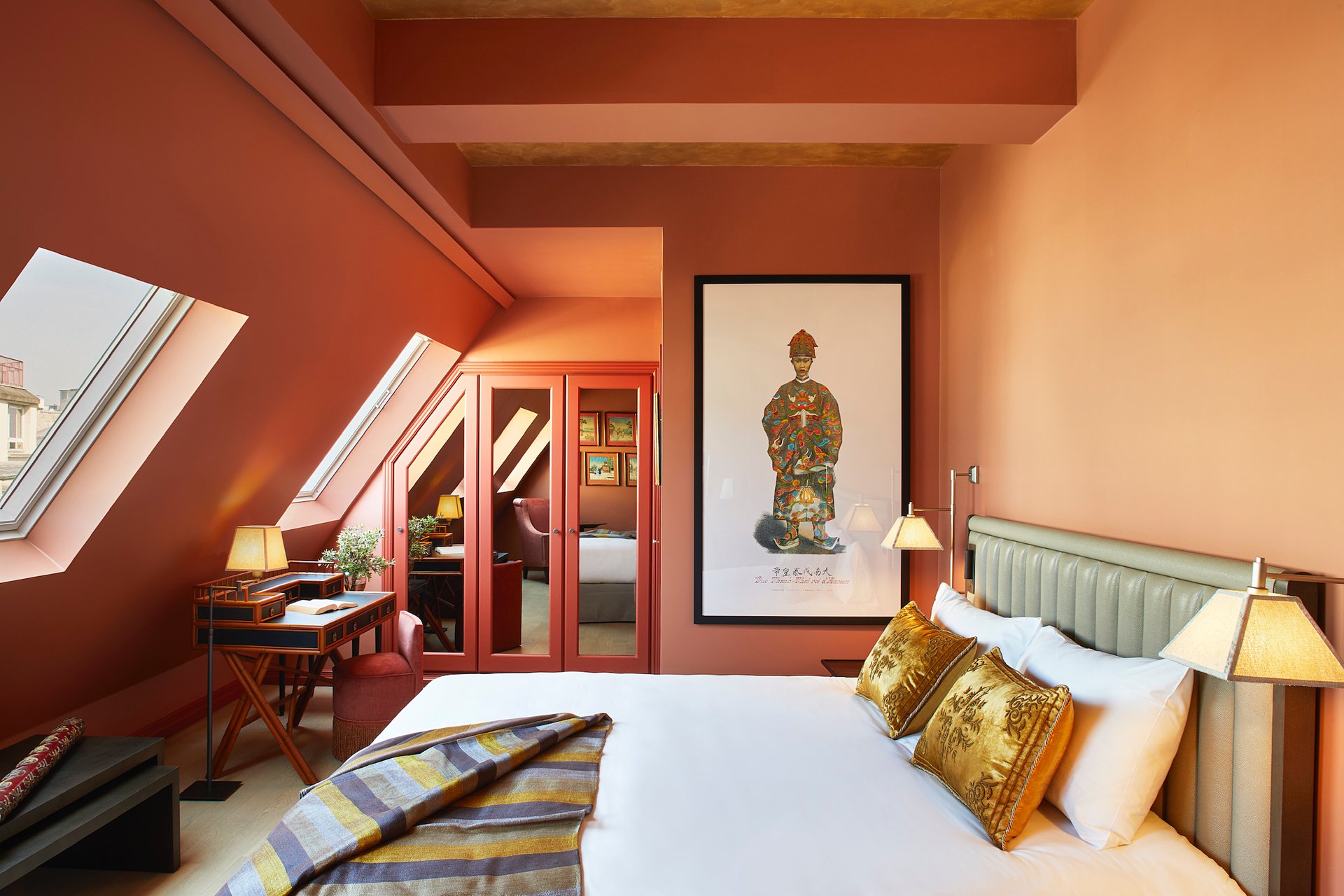
Deluxe Room — The Silk Road never truly had an ending. It frayed, branched, transformed — and fragments of its influence found their way to Paris. In the collections of its museums, in the architecture of its grand townhouses, in the silks and lacquerware of its antique dealers, in the perfumed steam rising from its tea houses. The French capital carries within it a deeper memory of the Orient than one might suppose.
Hôtel de Montesquieu is the perfect place to transform that memory into lived experience. Its Orientalist décor, inspired by Montesquieu's Persian Letters — the Enlightenment philosopher captivated by the East — makes the stay itself the beginning of the journey. From its quiet street in the 8th arrondissement, the finest Parisian witnesses to this history are within reach on foot, just minutes away.
Hôtel de Montesquieu — an Orientalist sanctuary in the heart of Paris
Montesquieu published the Persian Letters in 1721. In this epistolary novel, two Persian travellers discover Paris with fresh eyes, dazzled and disoriented. It is this reciprocal curiosity — the East observing the West, the West turning eastward — that the hotel embodies in every room.
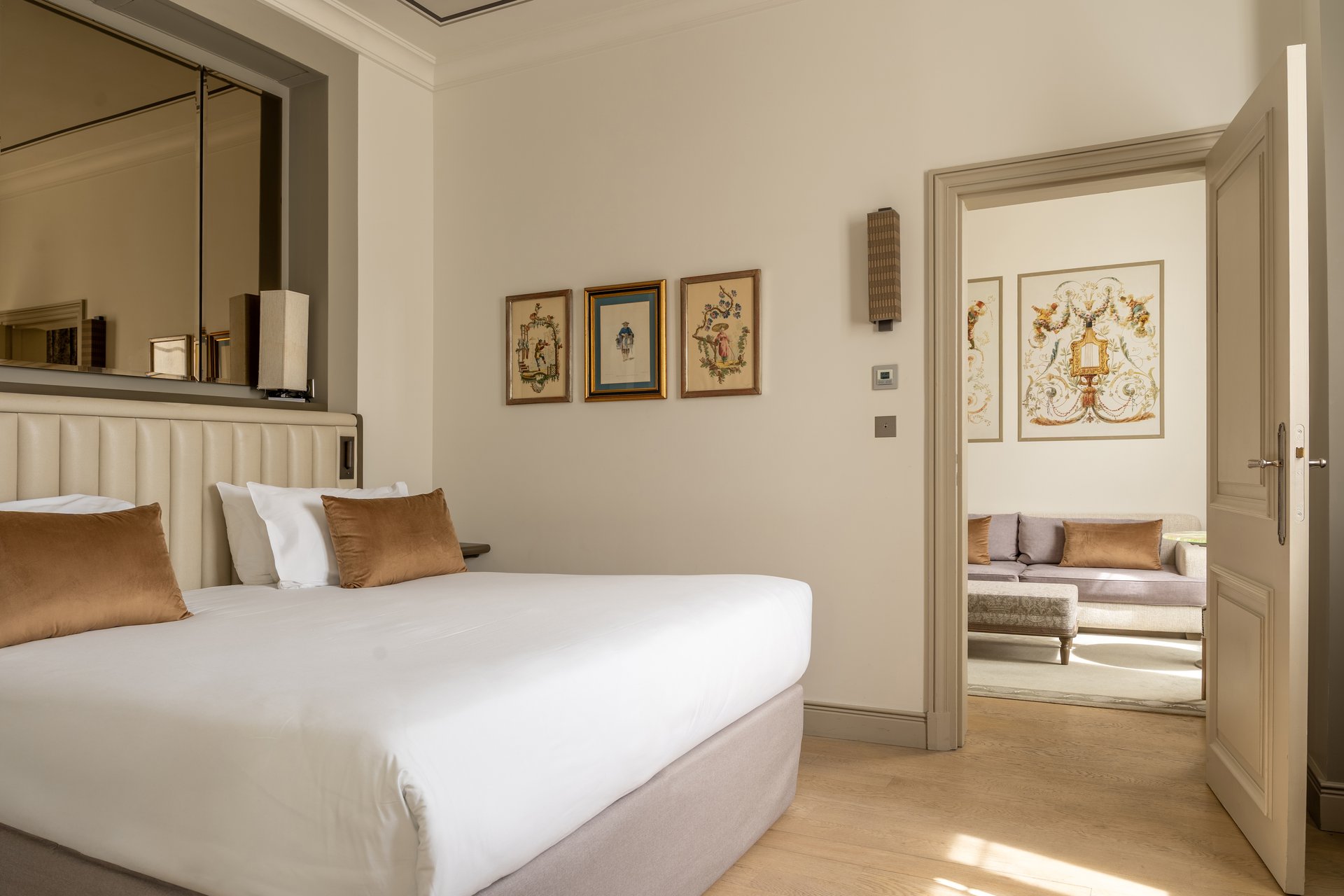
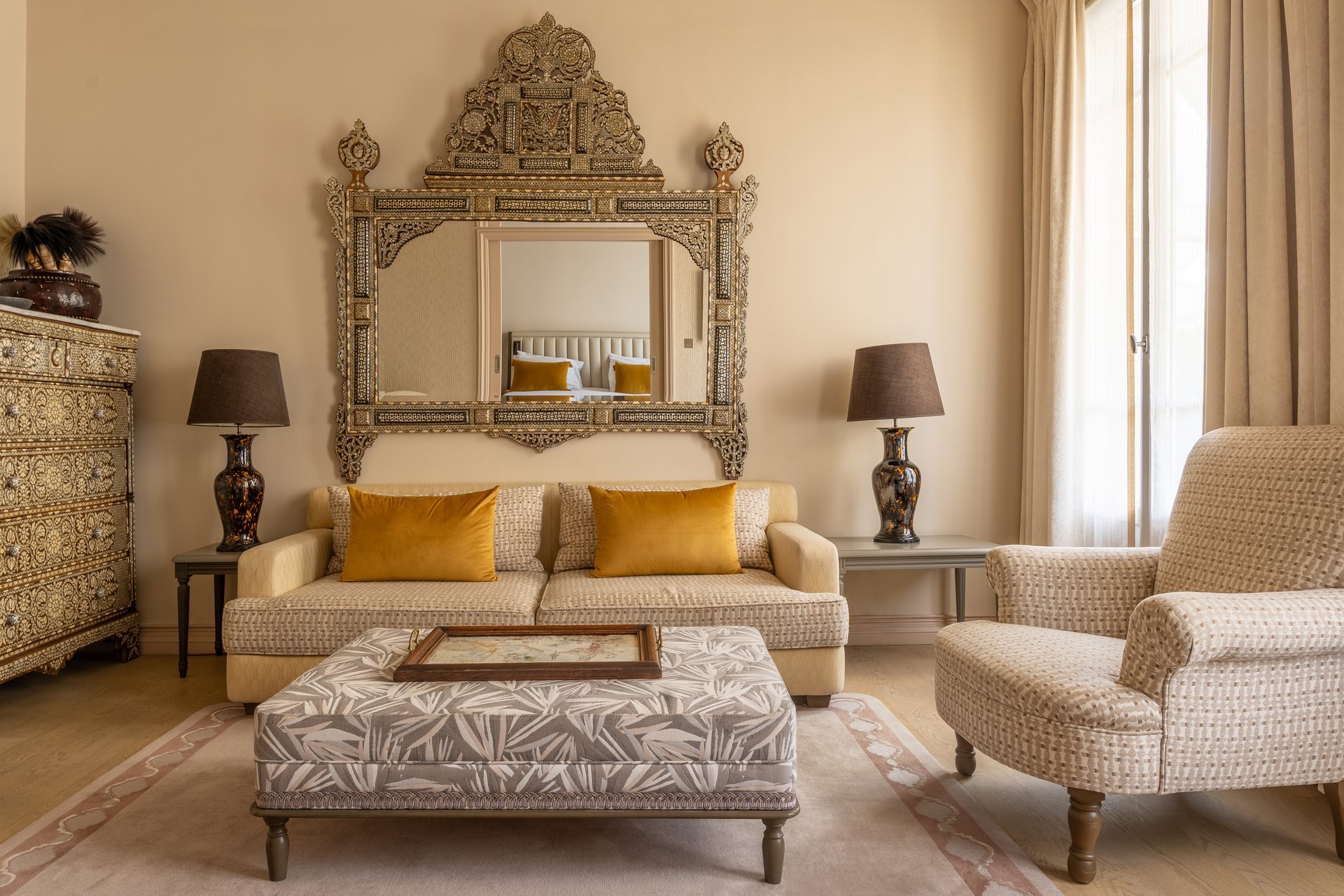
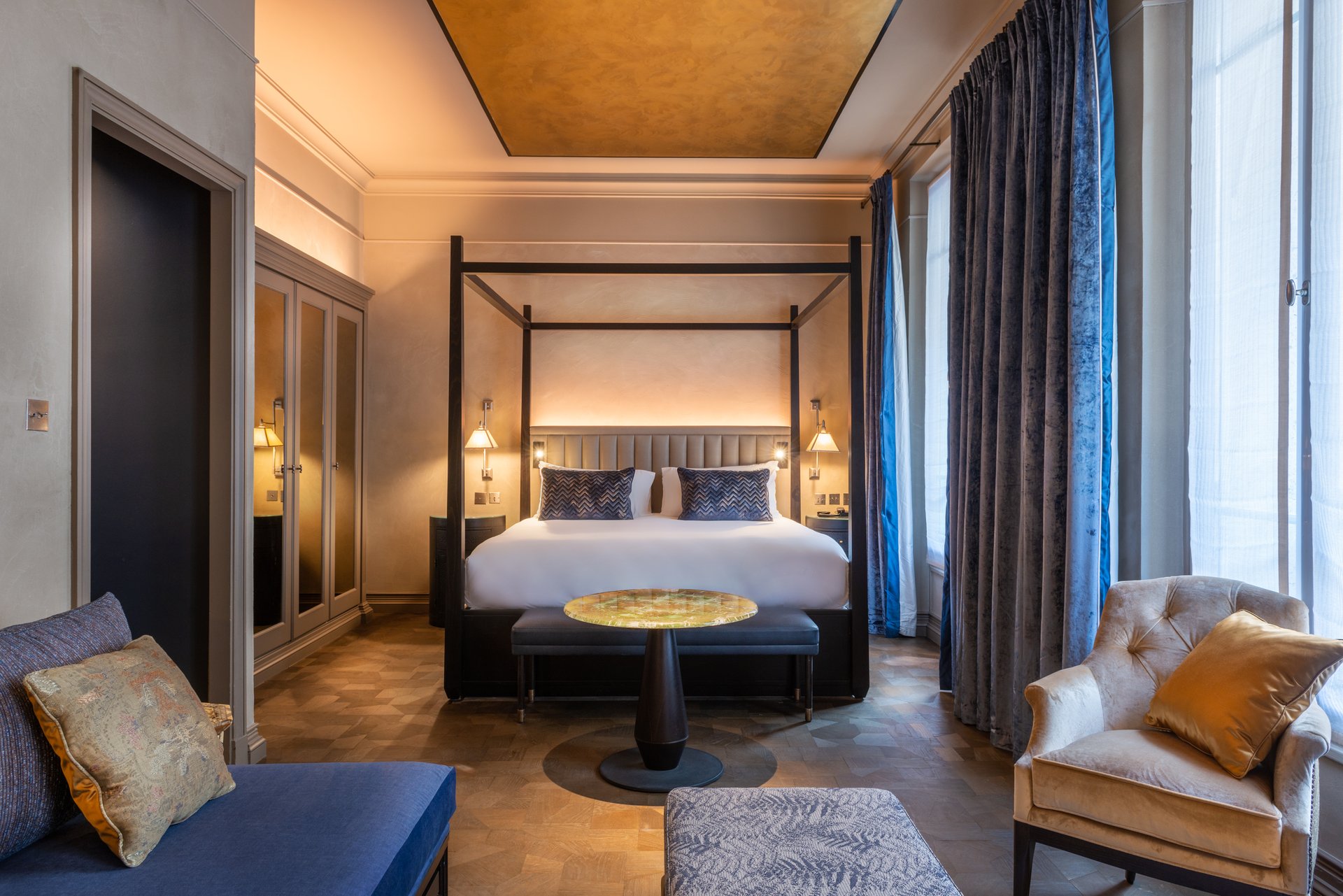
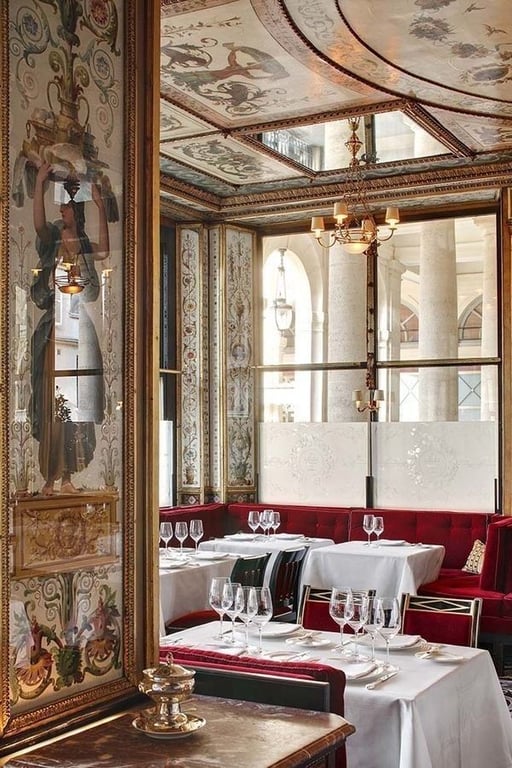
Precious fabrics, carved woodwork, wrought lighting fixtures, deep vermillion and gold tones: the hotel's décor is an invitation to travel before you have even crossed the threshold. Each room possesses its own universe, blending Mughal, Persian and Far Eastern influences with the precision of an enlightened curiosity cabinet.
Musée Guimet — Europe's foremost museum of Asian art
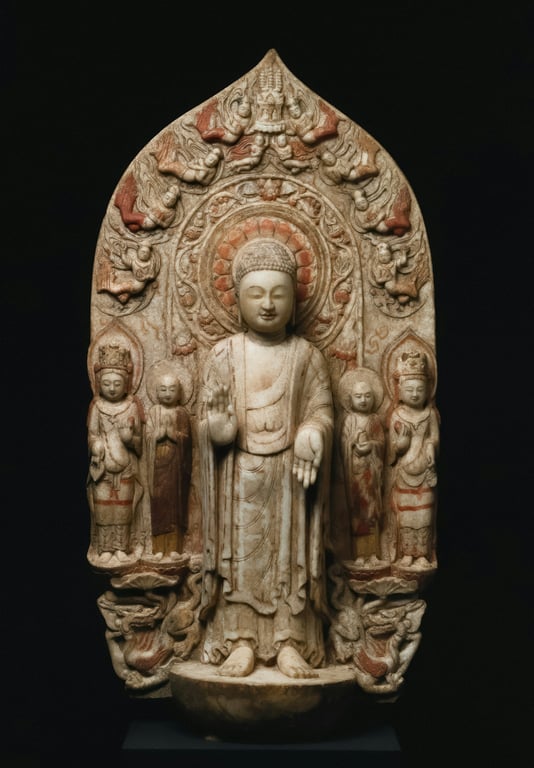
A twenty-minute walk from the hotel, on avenue d'Iéna in the 16th arrondissement, the Guimet National Museum of Asian Arts holds one of the world's most important collections outside Asia itself. Khmer sculpture from Cambodia, Japanese screens, Buddhist statuary from India, textiles from the Silk Road, Islamic metalwork: each gallery is a journey across time and space.
Founded by Émile Guimet, a Lyonnese industrialist and traveller, after his journeys through Egypt, India, Japan and China, the museum remains animated by that spirit of enlightened curiosity that Montesquieu himself shared. It ranks among Paris's most important cultural institutions — and among its most underappreciated.
Musée Cernuschi — Chinese art, ten minutes from the hotel
Located on avenue Velasquez, steps from Parc Monceau, the Musée Cernuschi is among the 8th arrondissement's most discreet addresses. Henri Cernuschi, a Milanese banker with a passion for the Orient, assembled it following a great journey through Asia in 1871. His collection — archaic Chinese bronzes, celadon